
Operation Mongoose: A Cuban History Lesson
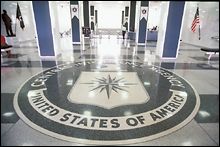 CIA Headquarters, Langley, Virginia
On November 30, 1961, President John F Kennedy authorized a major new covert operation aimed at removing Fidel Castro and dismantling the Cuban Revolution: Operation Mongoose.
Kennedy appointed Air Force Brig. Gen. Edward Lansdale - a renowned clandestine operative with 1950s experience in Vietnam and the Philippines - as the project's chief of operations in what was the biggest covert program initiated by the USA in the 1960s.
As we approach the 42nd anniversary of the 1962 October Missile Crisis it is worth pondering Operation Mongoose and its historical ramifications.
The project was so secret that many documents relating to its set-up and operation were only declassified in 1998 - a full 35 years after Mongoose was closed down. The CIA to this day still holds secrets about Operation Mongoose that are of the highest national security.
What is there still to hide?
Cuba was heavily condemned in 1962 when the Missile Crisis almost brought the USSR and the United States into nuclear conflict. However, there is now no doubt that the Cuban government was well aware of U.S. plans to invade the island in the months following the debacle of the failed Bay of Pigs invasion, and took the steps it had to take to protect its sovereignty.
Much information has come to light to indicate that then-President John F Kennedy and his brother Attorney General Robert Kennedy faced off against the desire of the U.S. Joint Chiefs of Staff to bomb the missile launching installations the USSR had set up in Cuba as a response to US missile batteries in Turkey and the constant threat of this invasion of the island by Washington.
However, from the outset Operation Mongoose was designed as a prelude to invasion and both Kennedy brothers had every intention of carrying out that invasion. Robert Kennedy, especially, was obsessed with this and ordered that "the Cuba Project was the top priority of the United States government - all else is secondary - no time, money, effort, or manpower is to be spared." (According to notes taken by CIA representative George McManus during a meeting of Operation Mongoose special group with Robert Kennedy, Jan 19th, 1962)
Former Kennedy insider Arthur Schlesinger, who along with former Kennedy Defense Secretary Robert Macnamara, attended a conference on the Missile Crisis here in Havana last year says: "As for Operation Mongoose, which Robert Kennedy kept trying to spur on -- not his finest hour -- this was not an assassination project but a foolish, futile and costly intelligence-gathering and sabotage effort." ."(Article written by Schlesinger for Nov/Dec 1998 edition of Cigar Aficionado)
Every aspect of covert destabilization was used to attack the Cuban government. Attempts to spark an internal revolt that could then lead to U.S. direct military intervention "to save democracy" under the umbrella of the pliable Organization of American States was planned.
Chemicals were used to affect the vision of cane cutters to sabotage the important sugar cane harvest; crop diseases were introduced to Cuba in the hope of bringing about a famine; fire bombs were dropped onto sugar mills from light aircraft "renegades" who had taken off from Florida; suggestions were made to drop leaflets on Cuba offering a bounty for anyone who killed Cuban government officials.
Other harebrained plans involved pretending that radio interference from Cuba would be responsible for a staged failed U.S. space launch; faking a Cuban attack on Guantánamo naval base to provide an excuse for U.S. armed intervention; and the incredibly childish idea of publishing a doctored photograph of Fidel Castro before a table replete with food, fawned over by two women in "any situation desired". (Pentagon representative Brig Gen William Craig memo to Lansdale, Feb 2, 1962)
Terrorist attacks against the island combined with psychological warfare were conducted with the specific target of an invasion date at the end of 1962.
Thus, it transpires that Havana was correct to fear another U.S. invasion, which is why it allowed the Soviets to place missiles on their territory in the first place. The eventual agreement reached between Washington and Moscow included a pledge by Kennedy not to invade Cuba.
Today Cuba is still subjected to Washington's psychological warfare. It is periodically accused of something bad just to keep electoral funds flowing from Miami. The latest imbecilities have been that Cuba is producing biological weapons; the island is deliberately jamming US TV signals aimed elsewhere (same scenario as the 1960s - someone's reading old CIA manuals); and that post September 11th, Havana did everything in its power to hamper U.S. efforts at counter-terrorism by supplying erroneous information to United States intelligence services.
It's as if Air Force Brig. Gen. Edward Lansdale was still running the show...
History teaches us a lot and we should be constantly using it as a learning tool. When members of the former U.S. administration responsible for the Bay of Pigs, Operation Mongoose and the Missile Crisis retract their former positions to "come clean" about what was really happening in those days, and attend a conference in Cuba on the subject, Havana can be seen to have been right in its interpretation of history.
Then and now.

Haga un comentario